


You probably already know the obvious stuff that wrecks your posture — slouching at your desk, hunching over your phone, carrying a giant backpack. We covered some of that in our article on 9 bad posture habits. But there’s a whole other layer of daily habits that are just as damaging and almost nobody talks about them. If you want to stop ruining your posture, these are the ones to pay attention to.
Your posture isn’t just how you stand for a photo. It’s the foundation of how your spine, muscles, and joints work together every day. When one part of that system gets thrown off — by the wrong shoes, a heavy bag on one shoulder, a phone cradled against your ear, or a mattress that sags in the middle — the damage adds up quietly over months and years. Most people don’t notice anything until they’re 40 and suddenly dealing with chronic back pain, neck tension, or an asymmetrical body they can’t explain.
Here are nine things you should stop doing right now if you want to keep your spine healthy.
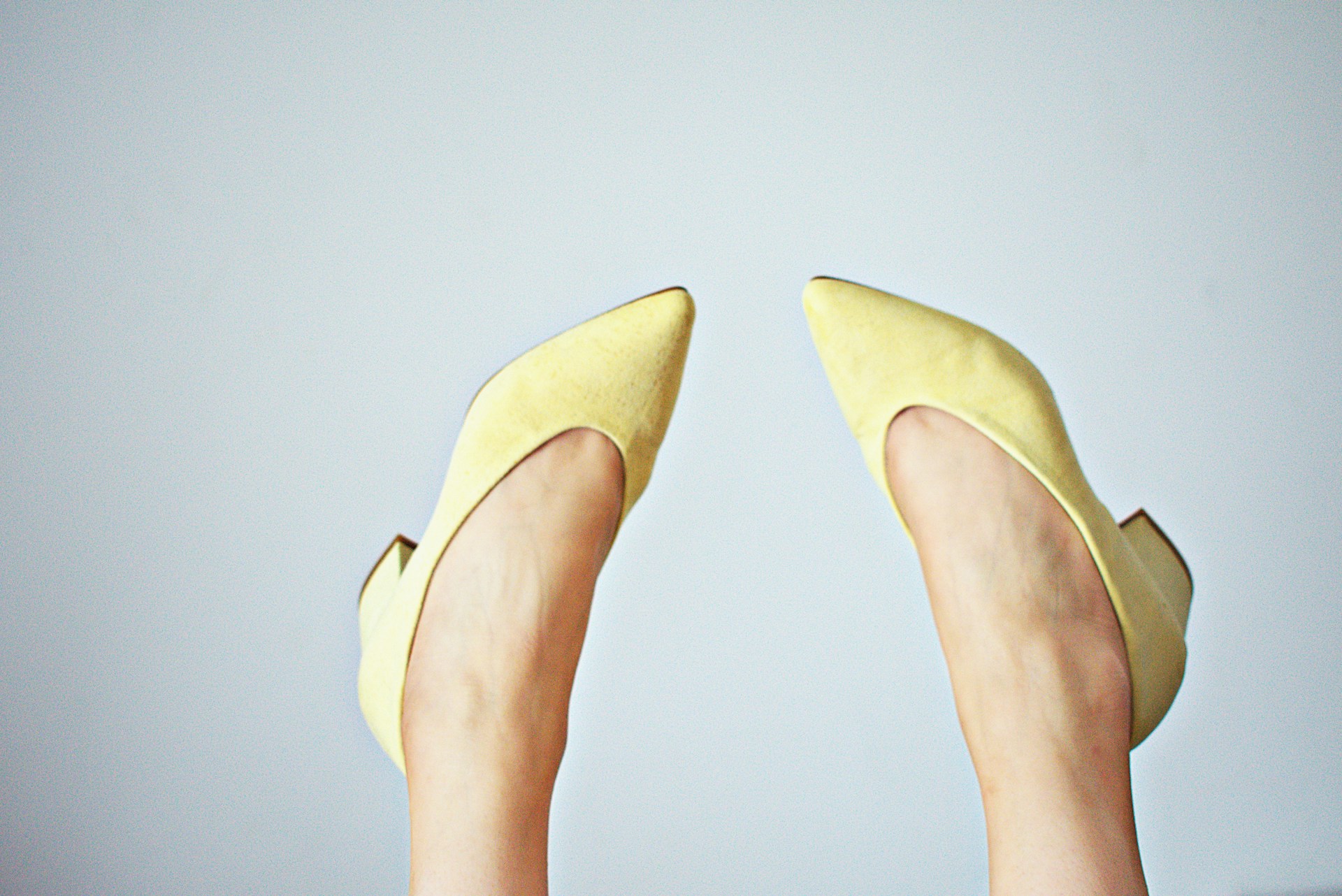
1. Wearing tight, narrow shoes that don’t support your feet
Your feet are the foundation of your entire body. Every time you take a step, they send signals to your brain about balance, weight distribution, and body position. When your feet are squished into shoes with narrow toe boxes, rigid soles, or no support — that foundation falls apart, and everything above it compensates.
Research from the Journal of Musculoskeletal and Neuronal Interactions found that poor footwear affects postural sway, stability, and balance. Tight shoes compress the bones and soft tissues of your feet, leading to bunions, hammertoes, plantar fasciitis, and joint compression. Over time, your gait changes. Your ankles start rolling inward. Your knees and hips shift to compensate. Your lower back picks up the slack. By the time you notice you’re slouching or your hips feel uneven, the damage is already traveling up your spine.
High heels are in their own category of bad. They tilt your entire body forward, forcing your lower back to arch more to keep you upright. Even “cute but uncomfortable” flats with no arch support can cause the same cascade of problems — just slower.
The fix: Choose shoes with a wide toe box (enough room for your toes to lay flat), real arch support, and enough cushioning to absorb shock. If your current shoes leave red marks on your feet at the end of the day, that’s a sign they’re too tight. Save the stilettos for special occasions.

2. Carrying a bag on one shoulder
This one is sneaky because most adults do it every single day — tote bags, purses, laptop bags, gym bags, messenger bags. It feels normal. But your body is paying for it.
When you carry weight on one shoulder, your body has to fight to stay upright. The shoulder with the bag lifts to keep the strap from sliding off. The opposite side drops to counterbalance. Your spine bends sideways away from the load. Your trapezius muscles — the ones that run from your neck down to your upper back — work nearly three times harder than they would if the bag were distributed across your body.
A study published in Gait & Posture found that one-shoulder bags cause “postural deviations in all planes” and, with long-term use, can contribute to functional scoliosis — an abnormal sideways curve of the spine. A larger study of schoolchildren published in 2024 found that kids who carried single-shoulder bags were more than 2.7 times more likely to develop adolescent idiopathic scoliosis than kids who used proper backpacks. Adults aren’t immune either — chronic neck pain, upper back stiffness, and shoulder asymmetry are all common consequences.
Here’s the really unfair part: even a light bag causes these problems. Research suggests shoulder pain can start when bags weigh as little as 4% of your body weight — that’s only about 6 pounds for a 150-pound person. Most tote bags weigh way more than that once they’re loaded up.
The fix: Use a backpack with two straps whenever possible. If you have to use a shoulder bag, switch sides often (at least every 15 minutes), keep it under 5% of your body weight, and wear it crossbody if it has a long enough strap. Crossbody carrying is still asymmetrical, but it’s significantly better than a pure one-shoulder load.

3. Working in a hunched-over position
This one is the invisible killer for anyone who works at a desk, uses a laptop in bed, or does any kind of close-up work (sewing, crafts, reading, studying). You don’t notice it happening. You just slowly curl forward over whatever you’re focused on, and by the end of the day, your upper back is aching and your neck feels stuck.
Here’s what’s actually happening: when you hunch forward, your spine curves into an exaggerated C-shape. Your head (which weighs about 10–12 pounds) drifts out in front of your shoulders, multiplying the load your neck muscles have to carry. Every inch your head moves forward adds roughly 10 pounds of effective weight on your cervical spine. Your upper back muscles get stretched out and weak. Your chest muscles get tight and short. Eventually, even when you try to stand up straight, your body physically can’t — the muscles have adapted to the hunched shape.
This is how “text neck,” rounded shoulders, and upper back pain develop. It’s also how the classic “computer hunch” becomes permanent over years of office work.
The fix: Set up your workspace so you’re not leaning forward to see your screen. Your monitor should be at eye level, your keyboard should let your forearms rest comfortably, and your feet should be flat on the floor. Take breaks every 30 minutes — stand up, roll your shoulders back, and stretch your chest. If you work on a laptop, get a laptop stand and an external keyboard.

4. Looking down at your phone (text neck)
Your phone deserves its own section because it’s doing something even worse than a hunched desk posture. When you tilt your head down to look at a screen, you’re not just slouching — you’re dramatically increasing the load on your cervical spine.
The numbers are wild. Your head weighs about 10–12 pounds in a neutral position. At a 15-degree tilt forward, that load effectively triples to around 27 pounds on your neck. At 45 degrees (the typical angle people look at their phone), it climbs to about 49 pounds. At 60 degrees, you’re asking your neck muscles to support the equivalent of an 8-year-old child hanging off your head.
Research published in Surgical Technology International was the first to quantify this, and it’s been repeatedly confirmed since. Up to 75% of people with forward head posture experience chronic neck pain, and phone use is the biggest driver. The average person spends 2–4 hours a day on their phone — multiply that by years and the cumulative stress on your spine adds up fast.
The fix: Bring the phone up to your eyes instead of dropping your head down to it. Hold it at face level when you can. Take breaks — every time you catch yourself hunched over, stop, straighten up, roll your shoulders back, and do a quick chin tuck (pull your chin straight back to stack your head over your shoulders). And honestly, try to just use your phone less. The best fix for text neck is less phone time overall.

5. Cradling your phone between your ear and shoulder
This is the sneakiest habit on the list because most people don’t even realize they do it. You’re on a long call. Your hands are busy cooking, typing, or holding a baby. So you wedge the phone between your ear and your raised shoulder and keep going. It feels harmless in the moment.
But holding that position for even a few minutes forces your neck into an extreme sideways tilt and elevates your shoulder in a way it was never designed to sustain. Your upper trapezius muscle (the one that runs from your neck to your shoulder) is asked to contract hard and hold still for the entire call. If you do this regularly — especially always on the same side — you develop chronic one-sided neck pain, asymmetric shoulder tension, and muscle imbalances that are surprisingly hard to reverse.
Physical therapists see this all the time. It’s especially common in people who spent years in jobs where they were on the phone a lot without a headset, and in new parents who hold the phone between ear and shoulder so their hands can stay free.
The fix: Use headphones, earbuds, or the speaker function. Any hands-free option. If you’re always on calls for work, invest in a decent wireless headset — it’s the single best piece of equipment for preventing this problem. And if you’ve already been doing it for years, try to notice which side you default to and consciously switch ears.

6. Sitting too much without exercising
A sedentary lifestyle is one of the most damaging things you can do to your posture — and it’s not just about spending hours in a chair. It’s about what happens to your body when your muscles stop doing their job.
Your spine is held upright by a network of muscles: your core, your back extensors, your glutes, your hip flexors, and your deep stabilizers. These muscles need regular activation to stay strong. When you sit all day without exercising, the muscles that hold your spine in place get weak. Your glutes literally forget how to fire properly (physical therapists call this “gluteal amnesia”). Your hip flexors get short and tight from being in a seated position for hours. Your core deconditions. Your back extensors give up.
The result is a body that physically can’t maintain good posture even when you want to. You slouch because the muscles that would keep you upright are too weak to do the job. You hunch because your chest is tight and your upper back is stretched out. You feel stiff when you stand up because blood flow to your spine has slowed down, and the discs between your vertebrae are literally drying out from lack of movement.
Sitting also physically compresses the discs in your lower back. Over years, this contributes to disc degeneration and chronic lower back pain.
The fix: Move often. You don’t need to become a marathon runner — just stand up and walk around every 30 minutes. Do some form of strength training at least twice a week (focus on your back, glutes, and core). Walking alone isn’t enough for posture — you need strength work to build the muscles that hold your spine upright. Stretch your hips daily if you sit a lot. And take the stairs. Small changes add up.
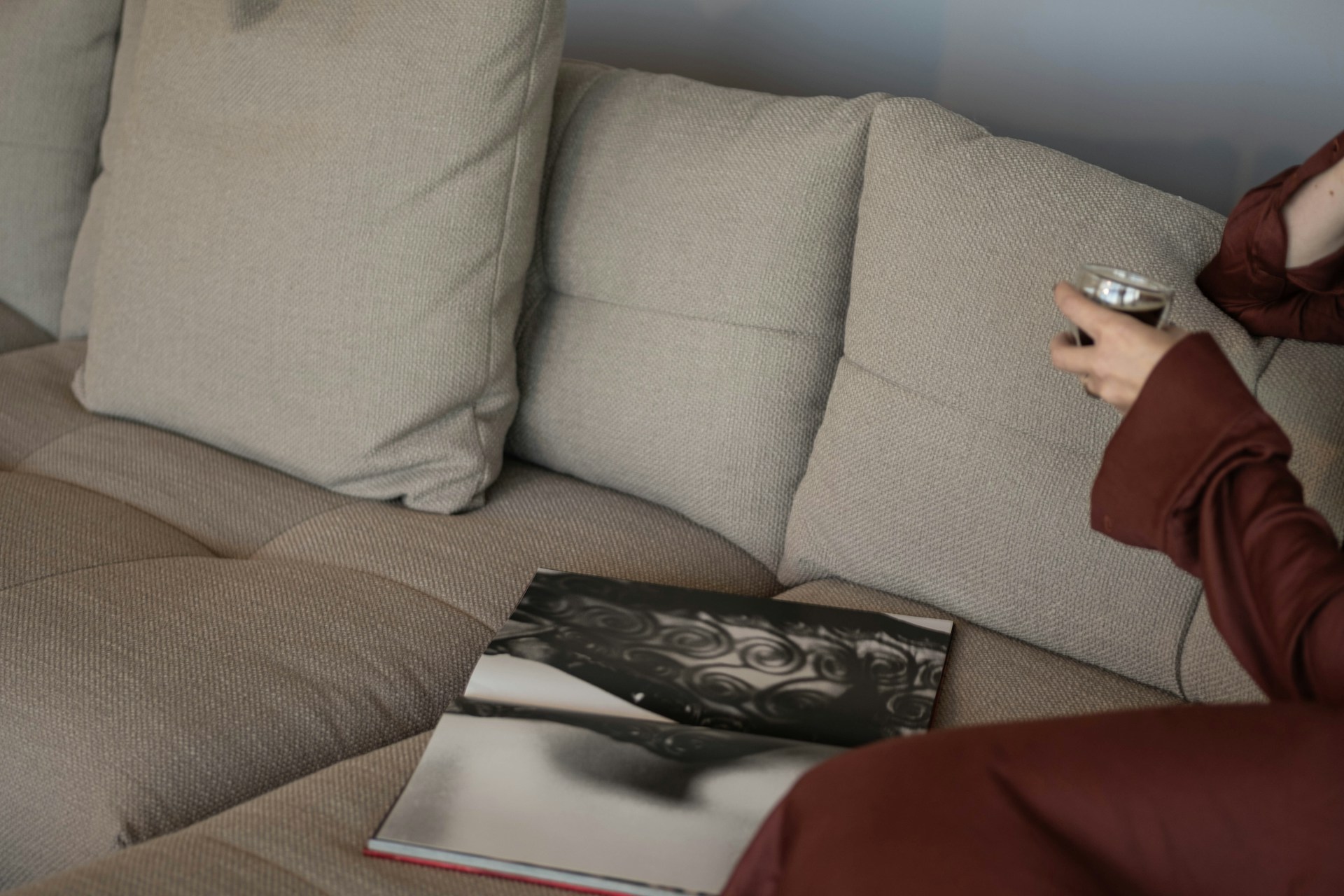
7. Sitting on overly soft couches and chairs
This one surprises people, but it’s real. That deep, overstuffed couch that swallows you when you sit down? It’s ruining your posture the entire time you’re on it.
Here’s what happens: a very soft couch doesn’t give your spine any support. Your pelvis sinks into the cushion, tilting backward. Your lower back rounds into a C-shape to compensate. Your upper back rounds forward. Your head drifts out over your shoulders. Within minutes you’re in a full slouch — except you can’t feel it because the cushion is so comfortable. You stay there for two hours watching TV, and by the time you stand up, your lower back is stiff and your shoulders are rounded.
The same thing happens with oversized beanbag chairs, sagging armchairs, and those “sink-in” gaming chairs that don’t actually provide structured support. Comfort and spinal support are not the same thing.
The fix: This doesn’t mean you have to throw out your couch. But when you’re sitting for long stretches, add a firm cushion or a lumbar support pillow behind your lower back. Sit closer to the edge of the couch so your feet can rest flat on the floor. If you’re gaming or watching a movie for hours, get up every 30 minutes and move around. And when you’re buying new furniture, test how firm it is — if you sink in and feel your spine rounding immediately, it’s not going to be good for long-term use.

8. Carrying a baby or heavy object on one hip
This one is for anyone who has young kids, carries groceries one-handed, or regularly lugs around a heavy purse, work bag, or laundry basket on one side of their body. It’s the same problem as the one-shoulder bag, but the weight is usually higher and the duration is longer.
When you hold a child on your hip, you automatically shift your pelvis out to one side to create a “shelf” for them to sit on. Your spine curves sideways to compensate. Your opposite shoulder drops. You’re holding this contorted position for 10, 20, 30 minutes at a time — sometimes hours a day if you have a toddler. New parents are especially prone to developing chronic hip, lower back, and shoulder pain from this exact pattern. Chiropractors call it “mom hip,” but it affects dads, grandparents, nannies, and anyone else who carries kids regularly.
The same thing happens with groceries. A single heavy bag in one hand pulls that shoulder down and makes your spine curve to compensate. Do it every week for years and you start to develop asymmetry you can see in the mirror.
The fix: Switch sides every few minutes when you’re holding a child. Use a baby carrier or sling that distributes weight across your torso instead of one hip. For groceries, split the weight between both hands, or use a backpack. When you have to carry something heavy with one hand, keep it close to your body and stand tall — don’t lean away from it to compensate.

9. Sleeping on a bad mattress or on your stomach
You spend roughly a third of your life in bed. If you’re sleeping wrong, you’re essentially training your body to hold bad posture for 8 hours every night.
The mattress problem: The landmark study on this came from The Lancet in 2003. Researchers followed 313 adults with chronic lower back pain for 90 days, randomly assigning them either a firm mattress or a medium-firm mattress. The result: people on medium-firm mattresses had significantly less pain in bed, less pain when they got up in the morning, and less disability overall. They were more than twice as likely to report improvement compared to people on firm mattresses.
This surprised a lot of people because the conventional wisdom has always been “firm is better for your back.” It’s not. Medium-firm is the sweet spot. Too firm and your mattress creates pressure points at your shoulders and hips, forcing your spine out of alignment. Too soft and your pelvis sinks in, creating an unnatural curve in your lower back that strains muscles and compresses spinal structures over hours of sleep.
The stomach-sleeping problem: Even the best mattress in the world can’t save you if you sleep on your stomach. Stomach sleeping is the worst position for your spine, and it’s almost never talked about. Here’s why: to breathe while lying face-down, you have to rotate your neck 90 degrees to one side and hold it there for 7+ hours. Your cervical spine stays twisted the entire night. Your lower back also flattens out unnaturally, losing its normal curve. People who sleep on their stomach often wake up with a stiff neck, a sore lower back, or tingling in their arms — and they blame the mattress when the real problem is the position.
The fix: Replace your mattress every 7–10 years, or sooner if it’s sagging. Look for something medium-firm — not rock-hard, not marshmallow-soft. Most reputable brands offer 100-night trial periods — use them, because it takes about 2–4 weeks for your body to fully adjust to a new mattress. And if you’re a stomach sleeper, try to transition to side or back sleeping. Side sleeping with a pillow between your knees is generally the best for spinal alignment. If you can’t break the stomach habit, use a very thin pillow (or no pillow) to reduce the neck rotation angle, and put a small pillow under your pelvis to support your lower back.
How to tell if you’re already ruining your posture
You don’t need an X-ray to notice whether your posture is already suffering. A few common signs:
- One shoulder sits noticeably higher than the other when you look in the mirror
- Your head naturally drifts forward of your shoulders
- You have chronic tightness in your upper back, neck, or lower back
- You wake up with back or neck pain that improves as the day goes on
- Your clothes don’t hang evenly on your body
- People have told you that you slouch (worth listening to — other people often notice it before you do)
- Your shoes wear down unevenly
- You get frequent tension headaches, especially at the base of your skull
If two or more of these sound familiar, you’re likely dealing with the early stages of posture-related issues. The good news is that most of these are reversible if you catch them early. The bad news is that the longer you ignore them, the harder they are to fix.
The takeaway
If you want to stop ruining your posture, the nine habits above are the ones that matter most — and they’re also the easiest to ignore because they feel normal. Nobody thinks twice about grabbing their tote bag on the way out the door, cradling their phone against their shoulder during a call, or buying the softest couch in the store. But these small daily choices stack up into real structural problems over time.
The fixes aren’t dramatic or expensive. Better shoes. A backpack instead of a shoulder bag. A headset for phone calls. A proper desk setup. Thirty minutes of movement a day. A decent mattress that actually supports your spine. Switching sides when you hold your kid. None of these require a gym membership, a supplement, or a “posture corrector” device (those don’t work, by the way — we wrote about that in our article on wellness products that don’t work).
Your posture is built from the ground up — from your shoes, through your spine, to the way you sleep at night. Take care of the foundation and everything else gets easier.
Sources
- Anwer S, et al. Effect of footwear on standing balance in healthy young adult males. Journal of Musculoskeletal and Neuronal Interactions, 2017. pmc.ncbi.nlm.nih.gov
- Smith JB, et al. The effect of frontpacks, shoulder bags and handheld bags on 3D back shape and posture in young university students: an ISIS2 study. Gait & Posture, 2012. pubmed.ncbi.nlm.nih.gov
- Kovacs FM, et al. Effect of firmness of mattress on chronic non-specific low-back pain: randomised, double-blind, controlled, multicentre trial. The Lancet, 2003. pubmed.ncbi.nlm.nih.gov
- Hansraj KK. Assessment of Stresses in the Cervical Spine Caused by Posture and Position of the Head. Surgical Technology International, 2014.
- Radwan A, et al. Effect of different mattress designs on promoting sleep quality, pain reduction, and spinal alignment in adults with or without back pain: systematic review of controlled trials. Sleep Health, 2015.
- Qureshi Y, Shamus E. Unilateral Shoulder Bags: Can They Be Worn in a Way to Reduce Postural Asymmetry? Internet Journal of Allied Health Sciences and Practice, 2012.
- Drzał-Grabiec J, et al. Effects of Carrying a Backpack in an Asymmetrical Manner on the Asymmetries of the Trunk and Parameters Defining Lateral Flexion of the Spine. Human Factors, 2014.
- Wang Y, et al. Risk factors for adolescent idiopathic scoliosis in school children: a large-scale cross-sectional study. BMC Public Health, 2024.
- Harvard Health Publishing. Why good posture matters. Harvard Medical School. health.harvard.edu
- Mayo Clinic. Office ergonomics: Your how-to guide. mayoclinic.org
- Cleveland Clinic. Posture: How to sit, stand, walk, and lie down. my.clevelandclinic.org
- American Chiropractic Association. Maintaining Good Posture. acatoday.org
- Sleep Foundation. Best Sleep Positions for Spinal Health. sleepfoundation.org
This article is for informational purposes only and isn’t a substitute for professional medical advice. If you have persistent back, neck, or joint pain, or notice signs of scoliosis or other postural issues, please talk to a qualified healthcare provider or physical therapist for a proper evaluation.