

5 steps to lose weight — you’ve seen this promise a hundred times. Usually it’s followed by a juice cleanse, a magic supplement, or some 30-day challenge that evaporates two weeks in. This isn’t that.
What follows is what the research actually supports: five concrete things that move the needle on fat loss, explained in plain language. No calorie restriction so extreme it breaks you. No workout program that requires two hours a day. Just the five levers that genuinely work — and why each one matters more than you might think.
Read all five before you dismiss any of them. They work best together.

Step 1. Eat in a calorie deficit — but a real one, not a punishing one
Every method of fat loss that has ever worked — every diet, every protocol, every “lifestyle change” — works for one reason: it puts you in a calorie deficit. You eat less energy than your body burns, so your body burns stored fat to make up the difference. There is no fat loss without this. It’s not a theory; it’s thermodynamics.
The part nobody explains properly is how big the deficit should be. And this is where most people go wrong — by making it too large.
One kilogram of body fat contains about 7,700 calories of stored energy. To lose 1 kg per week, you’d need to eat 1,100 fewer calories every single day. For most women, that’s 600–800 calories total — less than a toddler eats. It’s not just miserable; it triggers your body’s starvation response. Metabolism slows. Muscle breaks down. Hunger hormones spike. You eventually break and overeat. Then you restrict again. This cycle is why most diets fail — not because the person is weak, but because the deficit was biologically unsustainable.
Research consistently points to a deficit of 200–300 calories per day as the sweet spot. It produces around 0.2–0.3 kg of fat loss per week — slow enough to preserve muscle, gentle enough to keep hunger manageable, and sustainable enough to actually stick to for months. A 2021 review in Obesity Reviews confirmed that moderate deficits produce equivalent long-term fat loss to aggressive ones, with significantly better muscle retention and adherence.
How to find your number: calculate your maintenance calories using the Mifflin-St Jeor formula (your resting metabolism × your activity multiplier — we covered this in detail in our guide on calories for women at 30), then subtract 300–500. That’s your daily target. Track it honestly for 3–4 weeks and let the scale tell you whether you need to adjust.
What to eat within that deficit: prioritize protein above everything else. A 2015 review in the American Journal of Clinical Nutrition found that higher protein intake during a deficit preserves significantly more lean muscle than low-protein approaches. Aim for 1.6–2 g of protein per kg of body weight daily. Fill the rest with whole foods you actually enjoy — there’s no need to eliminate food groups, only to eat them in the right amounts.
One more thing: if you’re regularly eating 1,200 calories and wondering why nothing is working, the deficit isn’t the problem — the number is. Below 1,200 calories, it becomes nearly impossible to meet your nutritional needs without supplementation, and the hormonal response your body mounts to protect itself from starvation actively blocks fat loss. More on this in our breakdown of weight loss myths the fitness industry sells.
Step 2. Move more throughout the day — not just during workouts
Most people think about exercise as the hour they spend at the gym. But that hour accounts for a surprisingly small fraction of your total daily calorie burn — often less than 10%. The bigger variable is how much you move the other 23 hours.
Scientists call this NEAT — Non-Exercise Activity Thermogenesis. It’s all the movement that isn’t formal exercise: walking to the kitchen, fidgeting, taking stairs, standing while on calls, pacing while thinking, doing laundry. In active people, NEAT can add 1,000–2,000 extra calories of daily burn. In sedentary people, it contributes almost nothing.
A landmark study by Dr. James Levine at the Mayo Clinic found that the difference in NEAT between lean and obese individuals averaged 2.5 hours of additional incidental movement per day — not more gym time, just more moving around in ordinary life. People who maintained a healthy weight weren’t necessarily working out more. They were sitting less.
The practical implication: daily steps matter more than gym sessions for total calorie output. The research target most frequently associated with meaningful health outcomes is 7,000–10,000 steps per day. A 2021 study in JAMA Internal Medicine found that people averaging 7,000 daily steps had a 50–70% lower risk of mortality compared to those averaging fewer than 7,000 — and the benefits plateaued above 10,000.
How to actually do this:
- Set a step goal and check it at 3 pm — if you’re behind, a 20-minute walk closes most of the gap
- Take calls standing or walking instead of sitting
- Default to stairs whenever the option exists
- Park further away deliberately — not as a punishment, but as a system
- Walk after dinner — even 15 minutes improves blood sugar regulation and sleep quality, both of which affect fat loss
None of this requires a gym membership or a schedule change. It requires treating movement as a default rather than an event.
One note on eating speed: there’s strong evidence that simply eating slower meaningfully reduces total calorie intake at each meal, because fullness signals take about 20 minutes to reach your brain. We wrote a whole piece on the fork rule and how eating slowly supports weight loss — it’s one of the smallest changes with some of the most consistent evidence behind it.
Step 3. Do full-body workouts — especially strength training
If NEAT is the slow burn, structured exercise is what shapes the body you’re building underneath the fat. And the type of exercise matters — a lot more than most people realize.
Cardio burns calories during the session. Strength training burns calories during the session and raises your resting metabolic rate afterward by building muscle — tissue that burns more energy even while you sleep. This is called the EPOC effect (Excess Post-exercise Oxygen Consumption), and resistance training produces a significantly higher and longer-lasting EPOC than steady-state cardio.
A 2012 study in the Journal of Strength and Conditioning Research found that a single 45-minute resistance training session elevated metabolic rate for up to 14 hours after the workout. Cardio at the same intensity elevated it for significantly less time. Over weeks and months, that daily difference in resting burn adds up to meaningful fat loss — with no additional effort.
More importantly: muscle is what makes fat loss look like body recomposition rather than just becoming a smaller version of your current shape. Two people can lose the same 10 kg. One loses fat and muscle; they look deflated. One loses fat and keeps muscle; they look leaner and more defined. The difference is resistance training during the cut.
What full-body training actually looks like:
You don’t need to train every muscle group separately on different days. A well-designed full-body workout hits the major movement patterns — push (chest/shoulders/triceps), pull (back/biceps), hinge (hamstrings/glutes), squat (quads/glutes), and core — two to three times per week. This is enough stimulus to build and maintain muscle in most people who aren’t advanced athletes.
- 2–3 full-body sessions per week is the minimum effective dose for muscle maintenance and growth during a deficit
- Progressive overload — gradually increasing weight or reps over time — is what actually drives adaptation. Without it, you’re just burning calories without building anything
- Compound movements first — squats, deadlifts, rows, presses — because they recruit the most muscle and produce the biggest hormonal response
- Cardio as a supplement, not the focus — 2–3 sessions of moderate cardio (walking, cycling, swimming) per week supports heart health and adds to your calorie burn without eating into recovery
If you’re newer to lifting, bodyweight training — push-ups, squats, lunges, hip hinges, rows with resistance bands — provides the same stimulus and can be done anywhere. The tool matters less than the consistency and the progressive challenge.

Step 4. Take care of your body — sleep, stress, and recovery
This step gets dismissed as soft advice. It isn’t. Sleep and stress have direct, measurable effects on hunger hormones, fat storage, and your ability to make good decisions about food — and they’re among the most overlooked variables in fat loss.
Sleep comes first. When you’re sleep-deprived, your body produces more ghrelin (the hormone that makes you hungry) and less leptin (the hormone that tells you you’re full). A study published in the Annals of Internal Medicine found that cutting sleep from 8.5 to 5.5 hours per night reduced fat loss by 55% over two weeks — even with the exact same calorie deficit. The participants in the sleep-deprived group lost more muscle and less fat than those who slept properly. Same food, same exercise, dramatically different results — just from sleep.
Seven to nine hours per night isn’t a luxury. For anyone trying to lose fat, it’s a non-negotiable part of the protocol.
Stress comes second. Chronic stress elevates cortisol — a hormone whose job is to prepare your body for threat. One of the ways it does that is by promoting fat storage, particularly visceral fat around the abdomen. Cortisol also increases cravings for calorie-dense food and impairs the prefrontal cortex’s ability to make deliberate choices — which is why stressed people don’t just eat more, they specifically eat more of the foods they’re trying to avoid.
A 2014 study in Psychoneuroendocrinology found that women with higher cortisol reactivity consumed significantly more calories after a stressful event than women with lower cortisol reactivity — not because they were hungrier, but because the stress response activated reward-seeking behavior. Managing stress isn’t just good for mental health. It directly affects what you eat and where your body stores fat.
Recovery matters too. Muscle is built during rest, not during the workout itself. The workout creates the stimulus; sleep and recovery days create the adaptation. Training every day without adequate recovery doesn’t produce faster results — it produces overtraining, elevated cortisol, impaired sleep, and plateaus. Two to three rest or light-activity days per week is not laziness; it’s the mechanism.
Practical body care that supports fat loss:
- Keep a consistent sleep and wake time — even on weekends. Irregular sleep timing disrupts circadian rhythm and hormonal balance
- Limit screens and bright light in the hour before bed — blue light suppresses melatonin and delays sleep onset
- Build one genuine wind-down into your evening — not scrolling, something that actually lowers your nervous system activation
- If chronic stress is a real issue, treat it like the fat loss variable it is — therapy, structured downtime, and physical movement all have solid evidence for lowering baseline cortisol
- Schedule rest days the same way you schedule workouts — they’re not optional extras, they’re part of the system
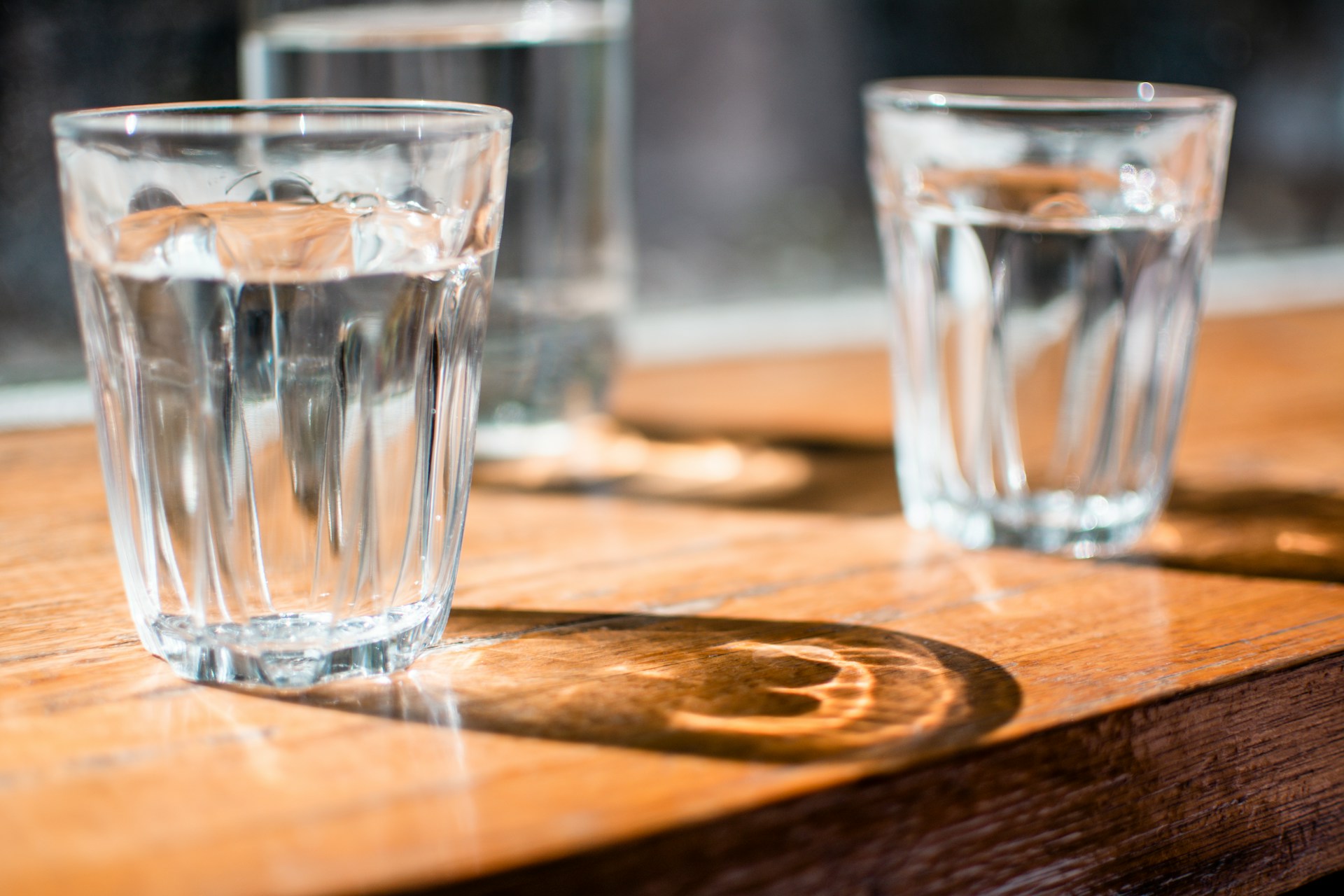
Step 5. Get your water balance right
Water is the least glamorous variable in fat loss — and one of the most consistently underrated.
The basic mechanism: your body is about 60% water, and nearly every metabolic process — including fat metabolism — requires adequate hydration to function efficiently. When you’re mildly dehydrated, your kidneys can’t filter waste effectively and your liver has to pick up the slack. The liver’s secondary role is metabolizing stored fat. When it’s busy covering for your kidneys, fat metabolism slows down.
A 2016 review in Frontiers in Nutrition compiled evidence across multiple studies and found that increasing water intake was consistently associated with reduced body weight — both through improved metabolic function and through reduced calorie intake, since thirst and hunger signals overlap significantly in the brain and mild dehydration is frequently misread as hunger.
Water before meals reduces intake. A randomized controlled trial published in Obesity found that drinking 500 ml of water 30 minutes before each meal led to significantly greater weight loss over 12 weeks compared to a control group — without any other dietary changes. The mechanism: the stomach volume signals partial fullness before the meal begins, reducing portion size naturally.
Cold water has a minor thermogenic effect. Your body warms ingested water to body temperature, burning a small number of calories in the process. This isn’t a fat loss strategy on its own, but it’s a real effect — 500 ml of cold water burns roughly 8–12 extra calories during the warming process. Eight glasses a day adds up to something, nothing dramatic, but it’s accurate.
How much water do you actually need? The commonly cited “8 glasses a day” isn’t based on evidence — it’s a round number that persisted because it was easy to remember. The research-supported approach is bodyweight-based: approximately 30–35 ml per kg of body weight per day, adjusted upward for heat, exercise, and caffeine intake (caffeine is a mild diuretic). For a 65 kg woman, that’s roughly 2–2.3 litres daily from all sources — including food, which contributes about 20% of total water intake.
Practical hydration habits that actually stick:
- Drink 500 ml of water first thing in the morning before coffee — you wake up mildly dehydrated from 7–8 hours without intake, and starting hydrated sets baseline energy and hunger signals for the day
- Keep a 1-litre bottle visible at your desk — you drink what you see; you forget what you don’t
- Drink a full glass before each meal — this is the habit with the most direct fat loss evidence and the lowest effort cost
- If plain water feels boring, add lemon, cucumber, or mint — no evidence it boosts fat loss specifically, but evidence strongly supports that people drink more water when it tastes better
- Check your urine color — pale yellow is hydrated; dark yellow means drink more; completely clear means you’re overdoing it and flushing electrolytes
One thing worth clarifying: hydration won’t directly burn fat in any dramatic way. What it does is remove the friction that slows everything else down — hunger confusion, low energy, poor workout performance, sluggish metabolism. When you’re properly hydrated, the other four steps work better.
How these five steps work together
The reason most weight loss attempts fail isn’t that people don’t know what to do. It’s that they try to change everything at once, burn out in three weeks, and conclude they “can’t stick to a diet.”
These five steps aren’t meant to be implemented simultaneously on January 1st. They’re meant to be stacked — each one building on the last.
Start with Step 1 and Step 5. Figure out your calorie target. Start drinking water before meals. Those two changes alone, done consistently, will produce results for most people within 3–4 weeks — without any additional effort. Once those feel automatic, add Step 2: commit to a daily step count and hit it. Once movement is a default, add Step 3: schedule two strength sessions per week. Step 4 — sleep and stress management — should be woven through all of it from the beginning, because nothing else works well on 5 hours of sleep and chronic cortisol elevation.
The goal isn’t to be perfect for 30 days. It’s to build a system that holds up for 30 months. That’s what actually changes a body — not the sprint, but the structure.
If you want to go deeper on what actually works (and what the fitness industry tells you works but doesn’t), our article on how to lose weight and keep it off covers the long-term side of this — and our breakdown of flat stomach hacks that don’t work is worth reading before you spend money on anything.
Quick reference: what to actually do
- Calories: find your maintenance number, subtract 200–300, hit your protein target (1.6–2 g/kg body weight)
- Daily movement: target 7,000–10,000 steps; stand more, sit less; walk after dinner
- Exercise: 2–3 full-body strength sessions per week with progressive overload; 2–3 cardio sessions as a supplement
- Recovery: 7–9 hours of sleep, consistent timing; manage chronic stress; schedule rest days
- Hydration: 30–35 ml per kg bodyweight daily; 500 ml before each meal; morning water before coffee
Sources
- Hall KD, et al. Calorie for Calorie, Dietary Fat Restriction Results in More Body Fat Loss than Carbohydrate Restriction in People with Obesity. Cell Metabolism, 2015. pubmed.ncbi.nlm.nih.gov
- Stiegler P, Cunliffe A. The Role of Diet and Exercise for the Maintenance of Fat-Free Mass and Resting Metabolic Rate During Weight Loss. Sports Medicine, 2006. pubmed.ncbi.nlm.nih.gov
- Leidy HJ, et al. The role of protein in weight loss and maintenance. American Journal of Clinical Nutrition, 2015. pubmed.ncbi.nlm.nih.gov
- Levine JA, et al. Non-exercise activity thermogenesis (NEAT): environment and biology. American Journal of Physiology, 2004. pubmed.ncbi.nlm.nih.gov
- Saint-Maurice PF, et al. Association of Daily Step Count and Step Intensity With Mortality Among US Adults. JAMA, 2020. pubmed.ncbi.nlm.nih.gov
- Paoli A, et al. Resistance Training with Single vs. Multi-joint Exercises at Equal Total Load Volume: Effects on Body Composition, Cardiorespiratory Fitness, and Muscle Strength. Frontiers in Physiology, 2017. pubmed.ncbi.nlm.nih.gov
- Borsheim E, Bahr R. Effect of exercise intensity, duration and mode on post-exercise oxygen consumption. Sports Medicine, 2003. pubmed.ncbi.nlm.nih.gov
- Nedeltcheva AV, et al. Insufficient sleep undermines dietary efforts to reduce adiposity. Annals of Internal Medicine, 2010. pubmed.ncbi.nlm.nih.gov
- Spiegel K, et al. Sleep curtailment results in decreased leptin levels, elevated ghrelin levels, and increased hunger and appetite. Annals of Internal Medicine, 2004. pubmed.ncbi.nlm.nih.gov
- Epel ES, et al. Stress may add bite to appetite in women: a laboratory study of stress-induced cortisol and eating behavior. Psychoneuroendocrinology, 2001. pubmed.ncbi.nlm.nih.gov
- Thornton SN. Increased Hydration Can Be Associated with Weight Loss. Frontiers in Nutrition, 2016. pubmed.ncbi.nlm.nih.gov
- Dennis EA, et al. Water consumption increases weight loss during a hypocaloric diet intervention in middle-aged and older adults. Obesity, 2010. pubmed.ncbi.nlm.nih.gov
- Morton RW, et al. A systematic review, meta-analysis and meta-regression of the effect of protein supplementation on resistance training-induced gains in muscle mass and strength. British Journal of Sports Medicine, 2018. pubmed.ncbi.nlm.nih.gov
This article is for informational purposes only and isn’t a substitute for professional medical or nutritional advice. If you have concerns about your weight, metabolism, or fitness, please consult a qualified healthcare provider or registered dietitian for a personal assessment.