


Some of the most popular wellness products don’t work — and the science is pretty clear on which ones. Walk into any drugstore, scroll any wellness influencer’s feed, open any “supported by” sidebar on a health website, and you’ll find the same handful of products being sold to you as essentials: magnetic bracelets, collagen powders, detox teas, apple cider vinegar gummies, posture correctors, multivitamins. The marketing is slick. The testimonials are glowing. The packaging looks like medicine.
Here’s the problem: when you actually read what independent researchers at places like the Mayo Clinic, Harvard Medical School, Johns Hopkins, the National Cancer Institute, and the U.S. Preventive Services Task Force have to say, a lot of these “essentials” fall apart. Some don’t work. Some work a little, but not nearly as much as the label promises. A few might even hurt you.
I’m not here to tell you what to spend your money on. But before you drop $40 on a jar of something, it’s worth knowing what the actual science says. Let’s go through six popular products I’ve stopped recommending — and why.

1. Magnetic bracelets and copper bracelets
Let’s start with the most clear-cut one. Magnetic and copper bracelets have been sold as pain-relief devices for decades — particularly for arthritis — and they still show up in wellness stores and airport kiosks. The theory is that magnets somehow influence blood flow, or that copper is “absorbed through the skin” to reduce inflammation.
Both theories are wrong. The Arthritis Foundation puts it bluntly: studies confirm these treatments are ineffective for arthritis pain. In 2013, researchers ran a well-designed double-blind trial on 70 patients with rheumatoid arthritis. Participants wore a real magnetic wrist strap, a demagnetized strap, a weaker magnetic strap, and a copper bracelet, in random order. The result? No significant difference between any of them — on pain, inflammation, joint swelling, or disease activity. Not even in blood tests measuring inflammation.
A systematic review and meta-analysis published in the Canadian Medical Association Journal reached the same conclusion: the evidence does not support using static magnets for pain relief, and they cannot be recommended as a treatment.
The researcher who ran the copper/magnet trial, Dr. Stewart Richmond of the University of York, had one of the best lines I’ve ever read on this topic: “Iron in the blood is not ferromagnetic [attracted to magnets]… If such theories were valid, the human body would explode when placed in an MRI machine. Thankfully, this doesn’t happen.”
So why do people swear by them? Three reasons: the placebo effect is real and powerful, arthritis pain naturally waxes and wanes (people often start wearing the bracelet during a flare, then credit the bracelet when the flare passes), and hope is a hard thing to give up. None of that means the bracelet is doing anything.
2. Collagen powders and drinks
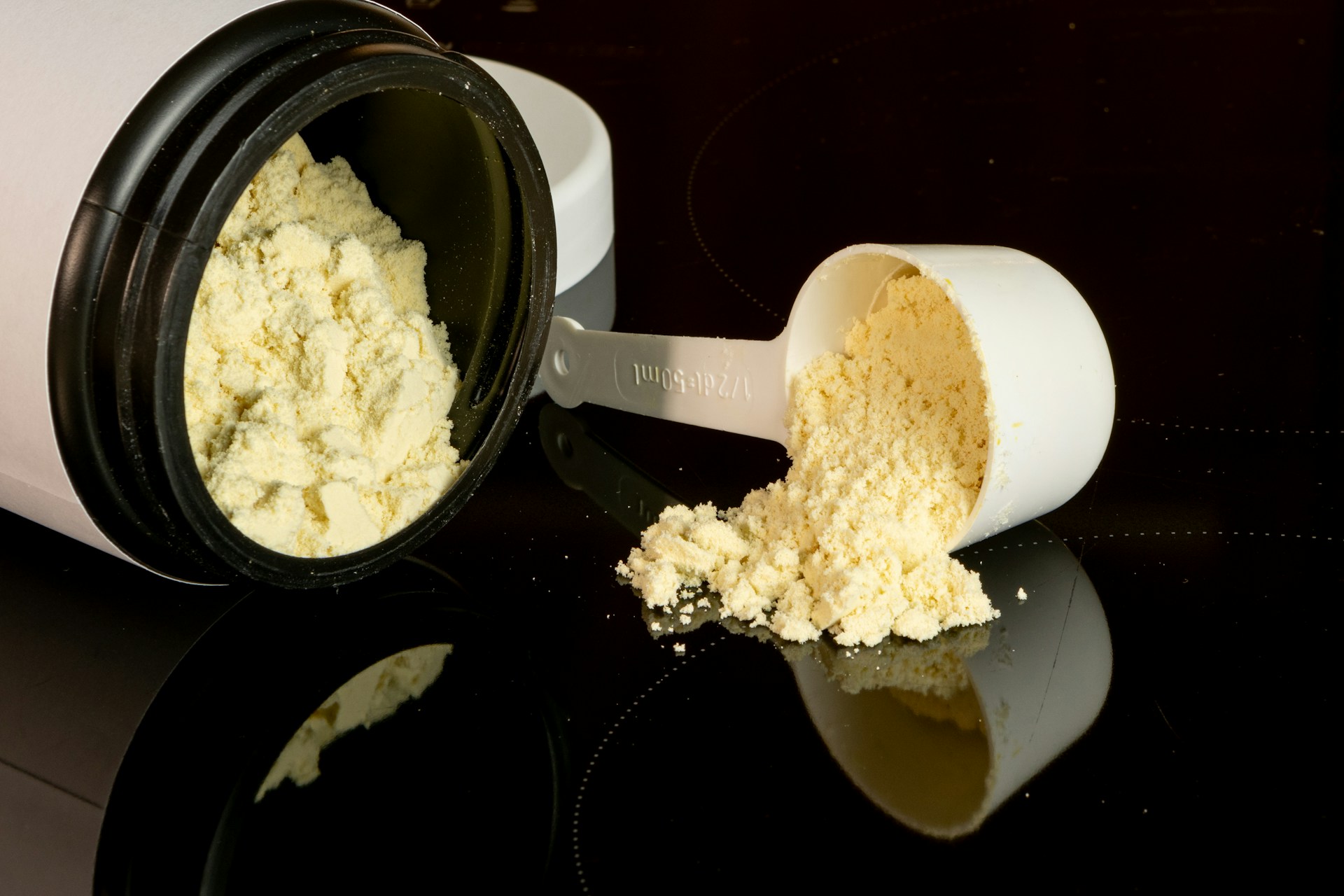
This one is more nuanced, and I want to be fair. Collagen isn’t a total scam — but it’s also not what the wellness industry sells it as.
The pitch: your body’s collagen production drops as you age, so drink this powder and you’ll get smoother skin, thicker hair, stronger nails, and pain-free joints. The reality, according to Harvard’s Nutrition Source: when you eat collagen, your stomach breaks it down into amino acids, which then get sent wherever your body needs protein. The idea that swallowed collagen somehow travels straight to your face or your knees is biologically naive.
That said, there are randomized controlled trials showing modest improvements in skin elasticity and hydration. Here’s the catch — and it’s a big one. A 2025 meta-analysis in The American Journal of Medicine looked at 23 trials on collagen and skin aging. When they analyzed all the trials together, collagen looked like it worked. But when they separated the studies by funding source, trials not funded by supplement companies showed no effect. High-quality trials showed no effect. Only lower-quality and industry-funded trials showed benefits.
NPR summarized the research this way: there are studies showing benefits, but many are industry-funded and low quality, and there’s basically no evidence that collagen supplements help your hair. Harvard Health recommends that if your goal is better skin, sun protection and topical retinoids have strong evidence — collagen does not.
Bottom line: if you already take it and feel it helps, fine. But if you’re thinking of starting, put that money toward sunscreen, a retinoid, and more protein in your diet. Those have the receipts.

3. Detox teas, cleanses, and “liver reset” kits
I’ll say this one plainly: your liver and kidneys are already the most sophisticated detox system on the planet. You don’t need to help them. You definitely don’t need to pay $80 for a two-week tea regimen to help them.
Johns Hopkins Medicine is direct about this: liver cleanses aren’t recommended because they’re not FDA regulated, lack clinical evidence, and don’t reverse damage from overeating or alcohol. Even more concerning, some supplements marketed as “liver detox” have actually been found to cause liver injury. Let that sink in — products sold to help your liver are sending people to the emergency room with damaged livers.
Harvard Health reviewed detox programs and found almost no relevant, high-quality medical evidence demonstrating health benefits. Harvard’s senior faculty editor Dr. Robert Shmerling put it this way: “Leave the detoxification to the professionals: your kidneys, liver, and other self-cleaning organs of your body.”
And about detox teas specifically — they often “work” because they contain senna, a laxative. You’re not losing fat, you’re losing water and stool. The scale drops, you feel lighter, you credit the tea. Meanwhile, Brown University Health warns that regular use can cause dependency, dehydration, electrolyte imbalances, and digestive problems. One Australian celebrity who built an empire selling a “cancer-curing” wellness diet later admitted she never had cancer — there’s a Netflix series about it. The detox industry has a history.
The “detox” you actually need is the boring one: drink water, eat vegetables, limit alcohol, sleep enough, move your body. Your liver handles the rest.

4. Apple cider vinegar (for weight loss)
Apple cider vinegar is the wellness product with the best story: “It’s natural, it’s cheap, it’s been used for centuries, and now studies show it helps with weight loss!” That last part is where things get interesting.
You’ve probably seen the headline: a 2024 study published in BMJ Nutrition, Prevention & Health claimed that people who drank apple cider vinegar daily lost almost 9 pounds over 12 weeks. It went viral. It was cited everywhere.
Here’s what most people don’t know: the BMJ retracted that study in October 2025. The publisher cited “concerns raised about the quality of the work.” Scientists had flagged the results as implausible within weeks of publication — the weight loss reported rivaled what people get on prescription drugs like Ozempic, which seemed impossible for a tablespoon of vinegar. It took the journal over a year to act, but act they finally did.
Before that study, Harvard Health’s position was already clear: the scientific evidence that vinegar consumption is a reliable, long-term means of losing weight is not compelling. The Mayo Clinic’s position is the same. Most of the supporting research was done on mice and rats, not humans, and the few human trials were small and short.
Does ACV do nothing? It may slightly lower post-meal blood sugar in some people, and it’s fine as a salad dressing. But as a weight-loss tool, the headline-making evidence turned out to be bad evidence. And drinking concentrated vinegar daily can damage your tooth enamel and irritate your throat and stomach.
5. Posture correctors, back braces, and kinesio tape
You’ve seen the ads: slip on this brace, pull the straps tight, and your slouching problem is solved. Your shoulders roll back, your chest opens, you suddenly stand like a Marine. For ten dollars on Amazon? Sign me up. And if braces aren’t your thing, there’s always the colorful option — those strips of kinesio tape you’ve seen on Olympic athletes and CrossFit influencers, promising pain relief, better posture, and muscle “activation.”
Let’s take them one at a time, because the evidence lands them in almost exactly the same place.
Posture braces. The evidence here is mixed — which is itself telling. Some small studies have shown that posture braces can reduce forward head posture and rounded shoulders while you’re wearing them, and a few trials suggest short-term improvements when combined with exercise. But a 2019 review looked at 137 studies on posture-correcting shirts and found that only 6 were high enough quality to even draw conclusions from, and the reviewers ultimately recommended against using them. A more recent 2025 review in Applied Sciences concluded that wearable posture devices can influence motor behavior in the short term, but the long-term benefits remain unknown.
Translation: the brace might remind your body what “upright” feels like for an hour, but there’s no solid evidence it fixes your posture permanently.
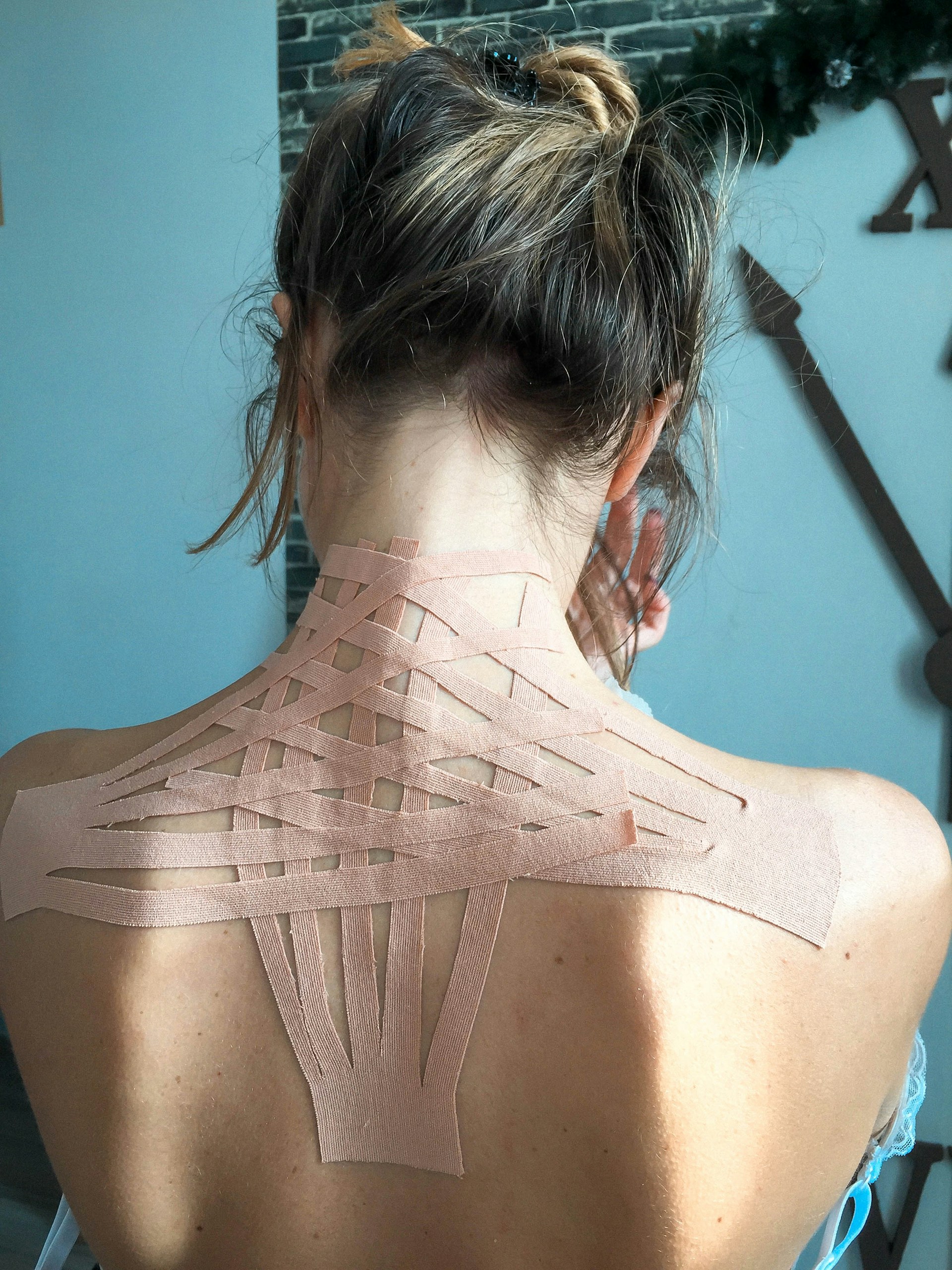
Kinesio tape. This is the one that really surprised me when I dug into the research. Kinesio tape was created in the 1970s by a Japanese chiropractor and became globally famous at the 2008 Beijing Olympics, when athletes started showing up covered in it. The pitch: the elastic tape lifts your skin slightly, improves circulation, “activates” muscles, and reduces pain. It looks scientific. Physical therapists use it. Insurance sometimes covers it. It must work, right?
Here’s what the research actually shows. A 2016 systematic review in The Journal of Manual & Manipulative Therapy concluded that there’s insufficient evidence that kinesio tape is better than sham (fake) tape for improving pain or disability in chronic low back pain. A 2016 randomized controlled trial published in the Journal of Orthopaedic & Sports Physical Therapy took 148 patients with chronic back pain, gave all of them exercise and manual therapy, and added kinesio tape for half of them. The result? The tape provided no additional benefit. The exercise and therapy did all the work.
Even the most generous recent meta-analysis — a 2025 review of 54 randomized trials and nearly 3,500 patients — found that kinesio tape beats placebo tape by less than 1 centimeter on a 10-centimeter pain scale. Statistically significant, clinically barely noticeable. The authors concluded that kinesio tape “may” help in the short term, but “existing evidence does not support the superiority of KT over other interventions.” Most of the included studies were rated low or very low quality.
The overall picture for both braces and tape is the same: they might give you a short-term subjective boost, but they’re not the thing that fixes your back or your posture. The thing that fixes it is boring — strengthening your core and upper back, stretching your chest and hip flexors, setting up your workstation properly, and not sitting still for hours. A brace or a strip of tape is a crutch. Sometimes a crutch is useful. But if you think the crutch is the treatment, you’re going to keep buying crutches forever.
If you want to wear a brace for 30 minutes a day as a reminder while you actually work on the real fix, or let a physical therapist tape you up as part of a broader program, that’s reasonable. If you think the brace or tape is the fix, the evidence says you’re going to be disappointed.
6. Multivitamins (for healthy adults)
This is the one that surprises people the most, so stay with me. About 1 in 3 American adults takes a daily multivitamin, mostly believing it’ll keep them healthier or help them live longer. It’s a reasonable thing to believe. It also doesn’t appear to be true.
In June 2024, a major study published in JAMA Network Open, led by researchers at the National Cancer Institute, followed nearly 400,000 generally healthy U.S. adults for over 20 years. The result, in the NIH’s own words: daily multivitamin use was not associated with a lower risk of death from any cause. Not from heart disease. Not from cancer. Not from cerebrovascular diseases. If anything, there was a small 4% higher mortality risk among daily users — though the researchers were careful not to claim multivitamins caused harm, since the study was observational.
That aligns with the U.S. Preventive Services Task Force’s 2022 review of 84 randomized controlled trials, which concluded that most vitamin and mineral supplements provide no clinically important benefit for preventing heart disease, cancer, or death in healthy adults without known nutritional deficiencies. In fact, the USPSTF actively recommends against taking beta-carotene or vitamin E supplements for disease prevention — those can cause harm.
Important caveat: this is about healthy adults eating a normal diet. There are groups who genuinely benefit from specific supplements — pregnant women (folic acid), older adults with B12 deficiency, people with diagnosed iron or vitamin D deficiency, people with restrictive diets, and anyone whose doctor has ordered bloodwork showing a gap. If you’re in one of those groups, keep taking what your doctor recommended. The science above isn’t about you.
And here’s something almost nobody talks about: a lot of the vitamins and minerals packed into a single multivitamin pill actually interfere with each other’s absorption. The human gut only has so many transporters, and several nutrients have to fight for them. A few examples documented by the NIH’s Office of Dietary Supplements and peer-reviewed research:
- Calcium blocks iron absorption. When taken together, calcium can reduce iron absorption by as much as 60%. If you need iron, you’re supposed to separate it from calcium by 2–4 hours.
- Iron and zinc compete for the same transport system. High doses of iron (25 mg or more) can significantly reduce zinc absorption — and vice versa.
- Zinc can cause copper deficiency. Taking 50 mg of zinc daily for as little as 10 weeks has been shown to lower blood copper levels. Long-term high-dose zinc without copper can cause anemia and neurological problems.
- Calcium and magnesium compete at high doses, reducing how much of either your body actually absorbs.
So when you swallow a one-a-day multivitamin that contains calcium + iron + zinc + magnesium + copper all in the same pill, you’re basically setting up a traffic jam in your digestive tract. The label says you’re getting 100% of the RDA of everything. Your body is only absorbing a fraction. It’s one of the quieter reasons the big mortality studies keep finding no benefit.
If you do need specific minerals, the right way is to take them separately, at different times of day, with professional guidance — not by swallowing one pill that promises everything.
But for the average healthy person who grabs a bottle of gummies off the shelf hoping it’ll “cover their bases”? Your food covers your bases. Vegetables, fruit, protein, whole grains. That’s the multivitamin.

What about the placebo effect?
One question I get every time I write about stuff like this: “But it works for me! Isn’t that enough?”
Honestly? Kind of. The placebo effect is real, and for mild, subjective issues like minor joint pain, fatigue, or feeling “off,” believing a product will help can genuinely make you feel better. That’s not nothing. But there are three problems with relying on it:
Some of these products have real risks. Liver damage from detox supplements. Tooth enamel erosion from ACV. Interactions with medications. “Natural” doesn’t mean “safe.”
It’s expensive. You’re paying $30–$80 a month for a feeling you could get from any number of cheaper or free things.
It can delay real treatment. If you’ve got a real problem — persistent joint pain, chronic fatigue, unexplained weight gain — chasing wellness products can push off an actual diagnosis by months or years.
So what actually works?
Here’s the part nobody wants to hear, because it’s not sexy and nobody can sell it to you in a subscription box: the boring stuff is what works.
- Move your body daily — walking counts.
- Sleep 7–9 hours.
- Eat mostly whole foods — plants, protein, whole grains.
- Don’t smoke. Go easy on alcohol.
- Protect your skin from the sun.
- Manage stress in ways that don’t involve a product.
- See a doctor when something actually hurts.
That’s 90% of it. The other 10% is genuinely helpful things your doctor might recommend for your specific situation — and those you’ll know about because someone ran a blood test, not because an Instagram ad told you.
Spend your money on food, good shoes, a gym membership, or just a nice walk somewhere beautiful. Your body will thank you more than any bracelet ever could.
Sources
- Richmond SJ, et al. Copper Bracelets and Magnetic Wrist Straps for Rheumatoid Arthritis. PLOS One, 2013. journals.plos.org
- Arthritis Foundation. Magnets, Copper Don’t Ease Arthritis Pain. arthritis.org
- Pittler MH, et al. Static magnets for reducing pain: systematic review and meta-analysis. CMAJ, 2007. cmaj.ca
- Harvard T.H. Chan School of Public Health. Collagen — The Nutrition Source. nutritionsource.hsph.harvard.edu
- Harvard Health Publishing. Considering collagen drinks and supplements? health.harvard.edu
- Effects of Collagen Supplements on Skin Aging: A Systematic Review and Meta-Analysis of RCTs. The American Journal of Medicine, 2025. amjmed.com
- NPR Life Kit. Do collagen supplements really work? 2025. npr.org
- Johns Hopkins Medicine. Detoxing Your Liver: Fact Versus Fiction. hopkinsmedicine.org
- Harvard Health Publishing. Harvard Health Ad Watch: What’s being cleansed in a detox cleanse? health.harvard.edu
- Harvard Health Publishing. Debunking common wellness myths. health.harvard.edu
- Brown University Health. The Truth About Detox Teas. brownhealth.org
- NPR. Apple cider vinegar weight loss study retracted. October 2025. npr.org
- BMJ Group. BMJ Group retracts trial on apple cider vinegar and weight loss. bmjgroup.com
- Harvard Health Publishing. Apple cider vinegar for weight loss: Does it really work? health.harvard.edu
- Mayo Clinic. Apple cider vinegar for weight loss. mayoclinic.org
- Effectiveness of Wearable Devices for Posture Correction: A Systematic Review. Applied Sciences, 2025. mdpi.com
- Medical News Today. Posture correctors: Effectiveness, types, and when to see a doctor. medicalnewstoday.com
- Loftfield E, et al. Multivitamin Use and Mortality Risk in 3 Prospective US Cohorts. JAMA Network Open, 2024. jamanetwork.com
- National Institutes of Health. For healthy adults, taking multivitamins daily is not associated with a lower risk of death. nih.gov
- U.S. Preventive Services Task Force. Vitamin and Mineral Supplements for the Primary Prevention of Cardiovascular Disease and Cancer. JAMA, 2022. uspreventiveservicestaskforce.org
- NIH Office of Dietary Supplements. Zinc — Health Professional Fact Sheet. ods.od.nih.gov
- Lönnerdal B. Micronutrient interactions: effects on absorption and bioavailability. British Journal of Nutrition, 2001. cambridge.org
- Piskin E, et al. Iron Absorption: Factors, Limitations, and Improvement Methods. ACS Omega, 2022. pubs.acs.org
This article is for informational purposes only and isn’t a substitute for professional medical advice. If you’re taking any supplement for a specific health condition, or considering stopping one, please talk to a qualified healthcare provider before making changes.